During the first week of October, Häme University of Applied Sciences’ Visamäki campus hosted the Innoboot Camp, bringing together students, experts, and guests around innovative learning and entrepreneurship. The week featured workshops, teamwork, deepening customer understanding, and networking. All in the spirit of the RUN InnoBoost project.
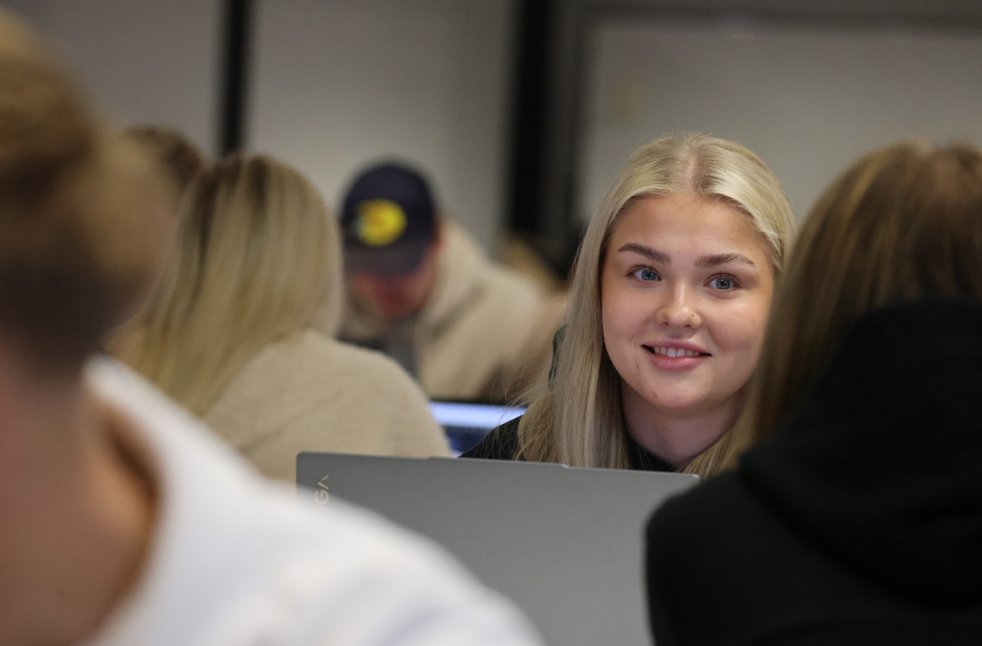
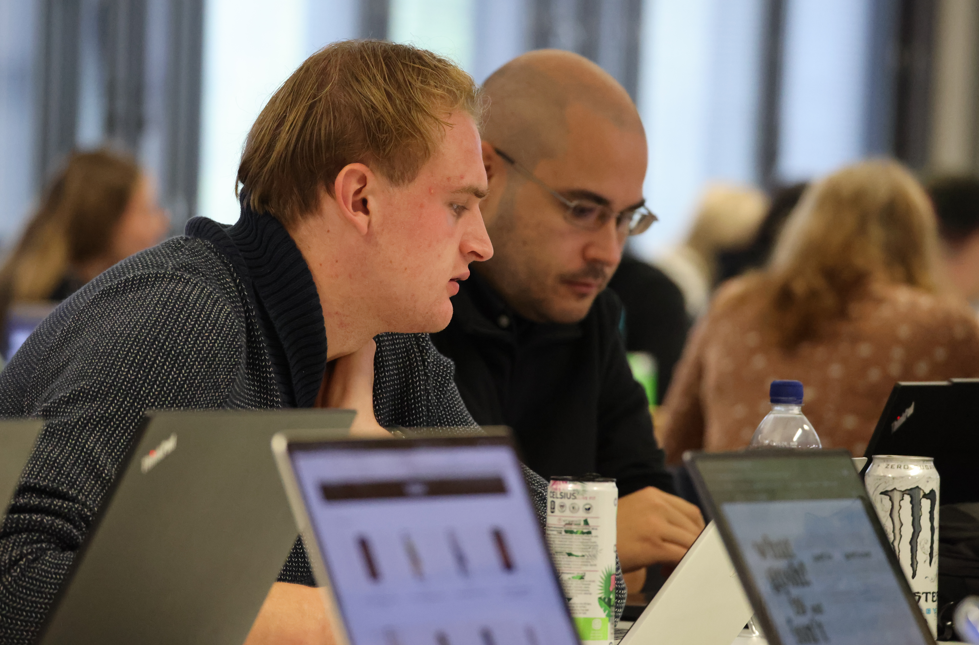
The students were really enthusiastic and embraced the challenge.
Maku Brewing’s Challenge: Gosh! and Future Flavor Trends
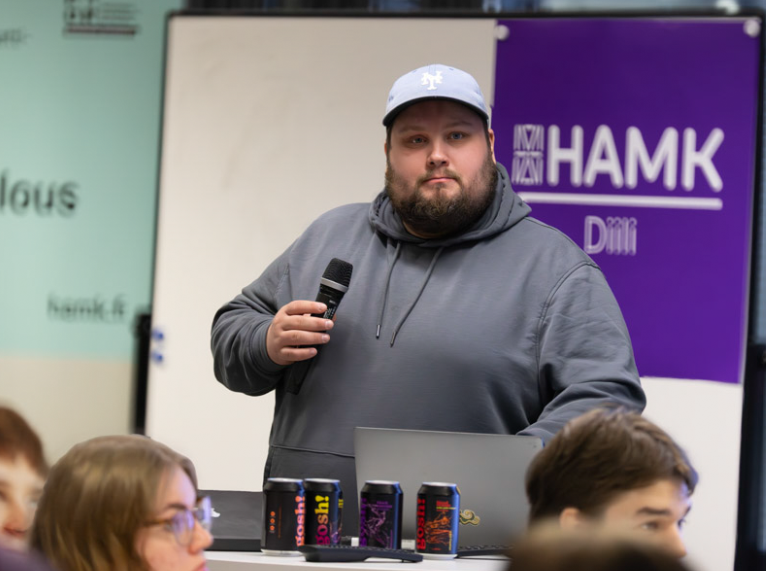
At the beginning of the week, students received an assignment from Maku Brewing, a craft brewery based in Tuusula, known for bold flavor experiments and anticipating trends. The task was introduced by Andreas Suni, Brand Director at Maku Brewing, and it focused on the brewery’s Gosh! brand, which targets millennials and the Gen Z generation.
The students’ mission was to develop a new product, service, or operating model that aligns with the philosophy of the Gosh! brand and supports Maku Brewing’s strategic direction. The goal was to identify the next viral flavor, either a single taste or a combination and to explore possibilities for replacing part of the added sugar with fruit sugar or extracts. Students were guided to use the Gosh! Brand Book, social media trend monitoring, as well as online and in-store observations of grocery retailers in the domestic market.
Support from Biotechnology and Food Technology for Product Development
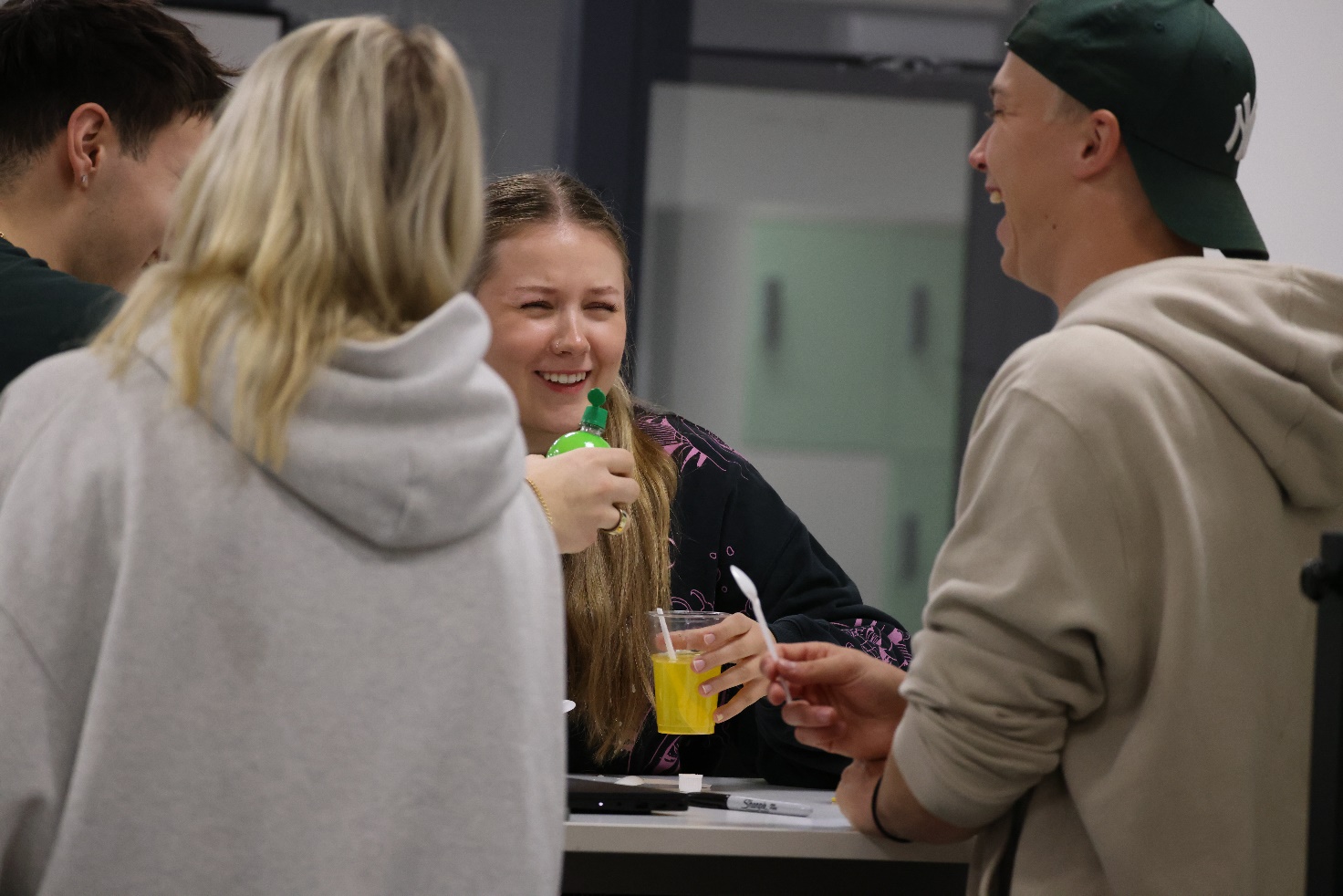
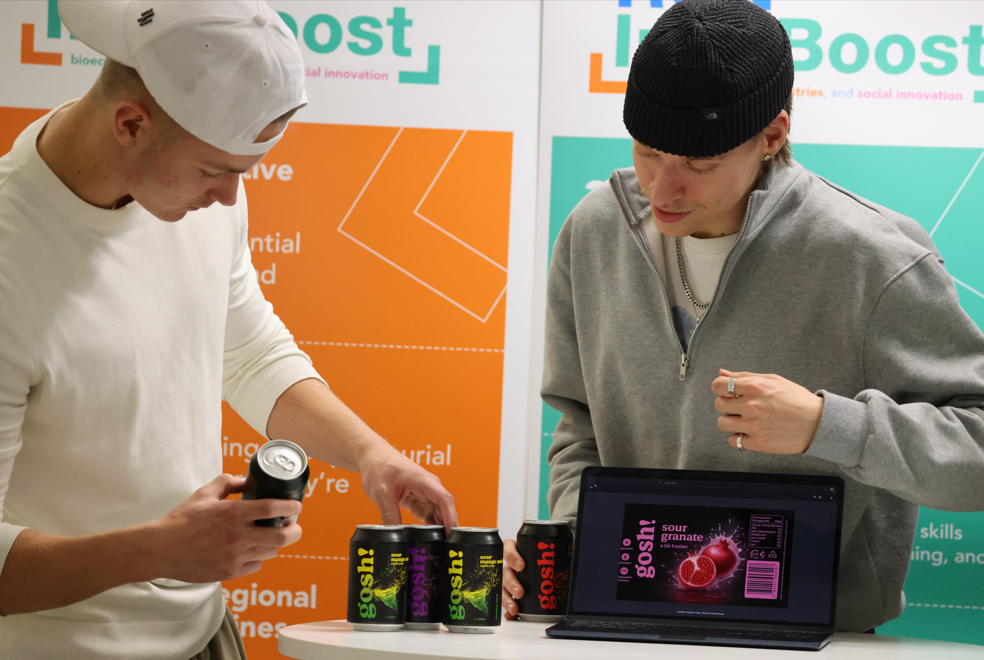
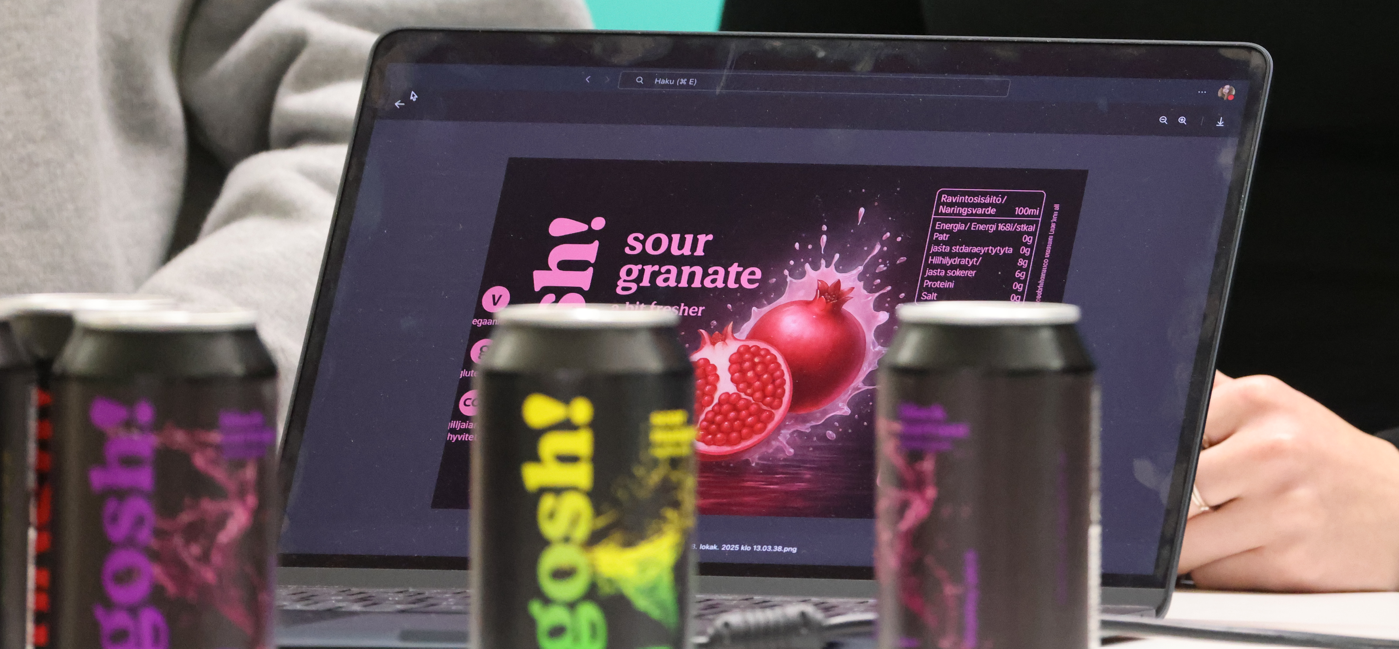
On Tuesday and Wednesday, students of biotechnology and food technology, together with experts Maria Tammi and Juuso Laaksonen, joined the teams to support the creation of flavor profiles and the development of prototypes. The outcome included both visual and taste-based prototypes that respect the identity of the Gosh! brand.
Lantmännen’s Perspective: Product Development in the Food Industry
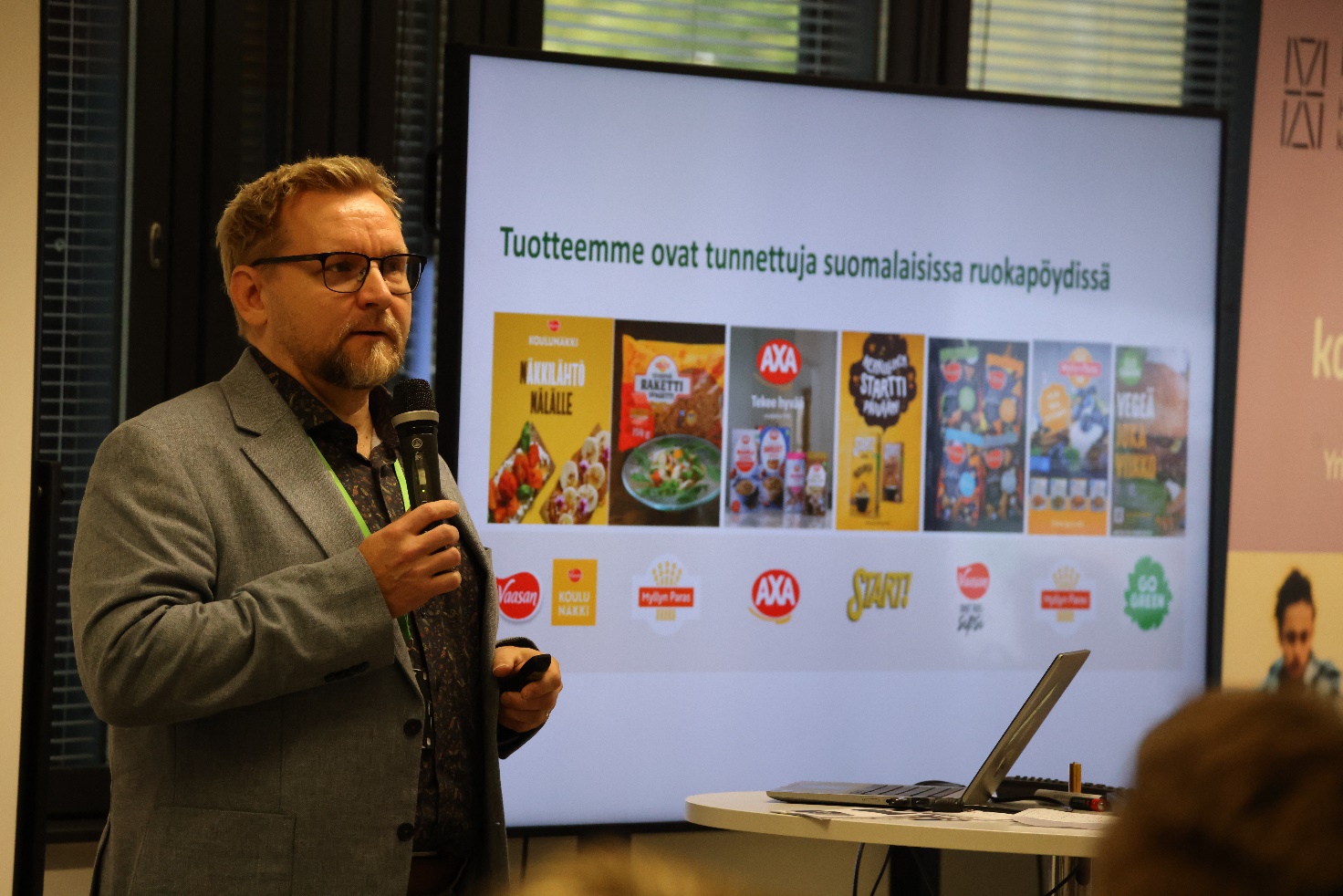
On Tuesday, the expert lecture was given by Iiro Heinonen, Lantmännen’s Director of Product Development, who shared insights on innovations and product development in the food industry. His presentation complemented the week’s program and provided valuable context for the students’ development work.